Saturday, 20 January 2007

ROMÁNTICO—The Evening Class Interview With Director Mark Becker, Pt. 1


Mark Becker's Romántico—which opens this weekend in Bay Area Landmark theaters (the Lumiere in San Franciso and the Shattuck in Berkeley)—had its premiere at Sundance and screened at several festivals, including Los Angeles, San Sebastian and Venice, among others. The documentary won a Special Jury Recognition at Silverdocs and was nominated last year for two Independent Spirit awards. A.O. Scott from The New York Times has written that Romántico—Mark Becker's study of Carmelo Muñiz Sánchez—is "a lovely, touching, moving portrait. This man talks about his own life—his own struggles—and you get a real sense of his dignity and that he is a genuine artist." Jon Anderson from New York Newsday describes Becker's film as "visual poetry on the run and, as any work of art does when it's successful, improves our perceptions of the world: No one who sees Romántico for what it is will likely ever again brush off a strolling musician, bypass a handbill or lobby for a border wall."

Along with being a documentary filmmaker and cinematographer, Becker also works as an editor. He co-edited Lost Boys of Sudan, which won an Independent Spirit award, as well as the Golden Gate Award at the San Francisco International Film Festival. He's worked as an editor for Lucasfilm, PBS, and on various independent productions. Formerly a resident of San Francisco for seven years, he now resides in New York City.

Becker agreed to speak with me and we met in the offices of Larsen Associates where we drank some dynamite French press coffee and talked about his current documentary. During the course of our conversation, Becker described his subject Carmelo Muñiz Sánchez's face as being full of life. I could say the same about Becker himself. His countenance is genuine and his eyes are kind.

* * *

Michael Guillén: Mark, I heard about Romántico when it was at the Film Foundation's festival. Michael Hawley, who frequently contributes to The Evening Class, was enthused about the film, encouraged me to see it, and so I'm glad I've had the opportunity. I live in the Mission myself and I'm sure I've seen Carmelo and Arturo. It's quite possible I even hired them through La Rondalla to play mariachi music at my home for a party I gave my Mom some years back when she was visiting San Francisco. Thus, it was great to see your in-depth portrait.

It's my understanding that this particular project Romántico started out because you wanted to do a study of the "bachelor culture" of musicians in the Mission? But then it actually ended up being a poignant tribute to family and marriage. How did that come about?

Mark Becker: As part of the process of making a documentary, it's a virtue of the filmmaker if they can keep open-minded—as far as what the film will be about—through the process. I had a vague notion of what the film was about. I was sure I liked elements of these two guys, their lives, and I could see how it could be cinematic and I could see how there could be contradictions. For example, it was an obvious interest of mine that they were Mexicans singing love songs to gringos and knowing that they were thousands of miles away from their loved ones. I knew I was interested in the fact that they created surrogate families for each other. When I talk about the "bachelor culture", what I mean is often the musicians would live in the same apartments, they'd cook together, they were each others' surrogate families here in the U.S., despite the fact that they had wives and children in Mexico. All those elements were interesting to me and I knew that they may come together in an interesting way, but I didn't know how. The reality of Romántico—and I think this may be the case for a lot of borderline sort of verité films (I hesitate to call my film verité but it's somewhat verité)—is that things happen and evolve. Things happen to the characters during the course of filming a movie. I found myself more interested and more compelled by the drama that Carmelo kept giving me than I was by my initial preconceived notions of what the film would be about. At a certain point I thought it was important for me to give in to the story that Carmelo was giving me, which was a very personal story. It was a story about the juncture between work and family and how the two don't necessarily work hand in hand always. Carmelo [thought] he was doing such a better job of taking care of his family when he wasn't with them, when he was a thousand miles away from them in San Francisco, and so my process was to let the story evolve and to not impose in too strong of a way my original preconceived notion of the film and try as hard as I could to channel what I thought was compelling about what Carmelo was giving me.

Guillén: Well, I'm really glad you didn't replace him with Antonio Banderas!

Becker: [Laughs.] I pride myself on being very communicative about the process with film subjects because I don't like the idea that you just show up with a camera on your shoulder and shoot without explaining a little bit about how documentary filmmaking works. From the get-go I talked to Carmelo about how the film was being financed because I wanted him to be comfortable with the fact that this was … y'know, it's always an odd situation that you're spending money on a film when you're making films about people who don't have any money. I was honest about that. I talked to him about how the filmmaking worked, how we spend a lot of time with any given person, and you end up choosing small moments from all of your footage and I thought he really got it, that this was a documentary about him, I'd be spending a lot of time with it, and that I'd be culling it down to an hour and a half film. It was so shocking to me, two years into the project we were just sitting around having a chat, myself and my crew members eating lunch in Mexico and he asked one of my friends, "When are you going to be replacing me with the actor?" Two years and he thought he was research. [Chuckles.]

Guillén: That brings up an interesting point. You describe financing a film about someone without money, but was Carmelo reimbursed in any way for his participation in the film? Or was the fact that you chronicled his story for his family sufficient compensation for him?


Becker: My understanding with him from the beginning before I got to know him and became what I guess you'd call friends with him [was] that I had a certain budget for the film that was from grants and the film was being funded by those grants. That's how I explained to him that—despite the fact that it might look like I had a bunch of money—it's really this borrowed money that's paying for this film about him. I also explained to him that you can't—I mean I'm just upfront, maybe I shouldn't be, but I was just upfront—I said, "Y'know, you really can't pay documentary film subjects because that would turn you into an actor and I don't want you doing anything for me. I want to be able to capture as much reality as possible." He's always wanted to tell the story of his life. That's the way he understood it from the beginning. That being said, I think there's this dynamic [that's] really bizarre, which is how diametrically opposed this documentary ethos is—never pay your film subjects—from the human relationships which are, like, okay, you've now grown familiar and you have some affection for your film subject and they're suffering in myriad ways and can you help them in any way without interfering with the documentary that you're making, which is supposed to capture truth?

Guillén: Yes. It's like the major imperative in Star Trek.

Becker: You've lost me there.

Guillén: That you're not supposed to affect history even if you go back in time. You're to remain non-intrusive.

Becker: Oh right. I see. So I should say—I don't know if it's worth noting—but when I would go down to Mexico, my family at the end of a shoot would give him what I call "the gift." It was made clear it wasn't payment for services but it would be like—I interrupted your life, you fed me, here's some money, we're so grateful sort of thing—and so there was that. Within my modest means—obviously, they're not modest like Carmelo's—but, it was money that I was sure could help them for a couple of months. Then there's this whole notion—which I am so looking forward to—[of] helping his family now that the filmmaking process is over and there are none of the conflict of interests. The film will eventually make a profit. I'm still in debt to Romántico, but in the course of a few months I assume, I'm hoping, when it hits dvd, I'm going to be able to make a modest amount of money. After 7-8 years the film might make $10,000 or something and if I could split that in half and give Carmelo half of it, if it makes $20,000 and he can make $10,000 on the film, that would be enormous for his family.

Guillén: And would truly be generous on your part. I certainly didn't mean to make you defensive about how you've compensated Carmelo for his participation in the film; what I meant more to illustrate was how a documentarian cannot intrude upon the circumstances of what he's portraying; in your case, Carmelo's poverty and his struggle to survive. By way of separate example, I recently interviewed Rainer Hoffmann, the cinematographer for the documentary The Short Life of Jose Antonio Gutierrez, and in that film there's an arduous train sequence involving Guatemaltecos journeying North to the United States where in the back of my mind I kept wondering why Hoffmann didn't just offer to drive his subjects North? To help them out? But, of course, he couldn't do that. That would interfere with the truth of the situation and—in order to film that truth—Hoffmann had to actually ride the train with these immigrants.

Becker: I just worked on a film as an editor where there's so many back seat interviews with the film subjects. You're looking at this character sitting in the back seat and you're wondering (as an editor), "Why is he in the back seat?" The camera turns and you see it's the producer who's driving the car and then I'm thinking, "How am I going to use this? Why's he sitting in the back seat? What could justify this in the movie? Will you notice? Will you think, 'Who's driving him?' " So it's that thing. I would probably rather that guy—if he didn't have a car—to figure out how to be with him on that journey. Would he have to walk to a bus?

Guillén: So when you say that you don't think of Romántico as verité filmmaking, why do you say that?

Becker: I'm speaking of it in the purist sense. There's a lot of verité footage [in Romántico], total fly-on-the-wall footage, waiting for things to happen and I'm just filming as it happens, but there's also an element to the film … where there are poetic scenes where the film is bringing you to an emotional place that has to do with Carmelo's past, images inspired by Carmelo's memories, revisiting places he's been in his youth, and as cinematically as possible capturing those places, joining his voice to those images. That's all highly constructed stuff.

Guillén: Memory as narrative structure?

Becker: Yeah.

Guillén: It's my understanding that Carmelo was the last of the Mission musicians that you were interviewing for your film project and that—once you met him—you decided he was the one because he was "cinematic." What was it about Carmelo that you saw as cinematic? Both in him and his story that brought you to the point of developing the script to be a "reverse immigration story"?

Becker: First of all, there's two things that inspired me about him at the very beginning. At the very beginning it's sort of guess work but you're working on instinct. One thing that inspired me was that he, I thought, had a very—people may disagree—but, I thought he had a very charming face. I felt like I saw a life in his face. The way in which he communicated with me was expressive and I loved something about his stature. I almost immediately saw him—and this sounds horrible—but I almost immediately saw him in this iconic way, him with his gut and his diminutive stature. I saw him in a wide shot, this small, almost cute, old man. I don't know how to say it properly.

Guillén: Almost like an archetype?
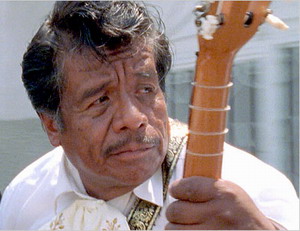

Becker: Yeah, like an archetype. Yeah. He belied the notion of somebody who crossed the border. He's an older guy. He just has nothing to do with the conventional notion of a young, hungry migrant worker. He seemed like a guy who'd been through it a bit. He had those creases in his face, but, there was something I found very charming about his face and his physical look. The real thing was his manner of speaking. He was candid. He was compulsively honest. He was speaking from his heart almost immediately and that's something you don't always find. It was obvious that he had lived an examined life. There's almost a cultural arrogance—I was talking to someone about this at a Q&A in L.A. a couple of days ago—there's this cultural arrogance that people who live hand-to-mouth existences, just working to be able to make money for the family, to get by, don't necessarily live an examined life, one in which they're self-reflective. This guy, Carmelo, immediately I realized he'd lived a reflective life. He thought about his place in the world.

Guillén: That especially came through for me when you were showing scenes of him with his nieve cart. It reminded me of something Joe Campbell taught me: that it's in the performance of our everyday tasks that our radiance shines through. The fullbodiedness of his experience is radiant in those sequences and there's something quite magnificent in his trying to provide for his family however he can.

Becker: It's so hard to not sympathize with a guy who—in order to make money—hits the streets selling ice cream to poor children.

Guillén: And often actually giving it away, remembering how he as a poor child could not afford ice cream.

Becker: And often giving it away. There's a crazy irony. He's this avuncular character. The ways he makes a living are either by singing love songs at weddings or funerals or in bars to prostitutes, or he's selling ice cream to little children. There's something about a person who earns a living like that.

Guillén: There's also a philosophical tension to his life story that captured my attention. Here is someone who lived in San Francisco, making relatively good money to send home, who returned home because his mother is sick, and is then in a situation once he's returned home where he can't earn as much money as he was earning in the States. That's when he begins doing these other things—like pushing the nieve cart—to make ends meet, though he never quite accomplishes it, and nonetheless elects to stay.

Becker: The circumstance with regard to Carmelo's return home was completely unknown at the beginning of filming. Carmelo had been in California for three years at the time that I started filming. I chose one shooting week—I'm shooting on film so I was really particular about choosing the right shooting week in which I could get a lot of stuff and minimize the economic impact of the shooting because shooting on film's expensive—so I choose my one shooting week and Carmelo, as far as I know on day one, is in San Francisco for the duration. On day three I find out he decides to leave and on day five I'm in the airport and he's going home. The film—in many ways—came to me. It became what it was because Carmelo gave me the gift of a story and a plot. That's what Carmelo provided the film in terms of dramatic structure. But then there's the surprise, which was Carmelo's gift of his—I hesitate to say "soul"—but his sensibility. I asked him on that first audio interview if he had any questions for me, if I had not addressed something that I might have in my interview, and he said, "Well you know, Mark, I've been waiting a long time to tell the story of my life and I think that this is it." I never imagined that he, on his side, would have felt that he was waiting for me and waiting for this opportunity. Between that and his sudden need to depart and go home to Mexico, I feel Carmelo led me to Romántico.


Friday, 19 January 2007

2007 PSIFF—General Dispatch On Palm Spring's Retirement Demographics


There was a snowy frost on the peaks surrounding Palm Springs, as well as on the audiences attending the festival's fare. Peter Martin—who covered the festival for Twitch last year—forewarned me the crowd would be senior but didn't tell me how young they would make me feel! In my mid-50s, I was a veritable spring chicken in this barnyard. That's not to say these senior cineastes were any less enthusiastic or entrenched in their cinematic habits. Some were even unruly; line chiselers never mature. They pretend they're daft and dotardly just to get to their favorite aisle seats. God forbid your head should be in the way of their subtitles.

I was quite amused by the various ways well-meaning elderly volunteers delivered house announcements before the screenings. They reminded audiences to hand in ballots (often instructing them on exactly how to tear them: not between the numbers and no more than half an inch in) and to turn off all phones, Blackberries, and other electronic devices that beep, buzz, light up, bark outloud, moan embarrassingly or that were—as one wry individual put it—not absolutely necessary to keep you alive. Sage advice for this particular crowd.

In line elderly matrons swapped Q&A tidbits like they were dishing dirt underneath beauty salon hairdryers. For some of them, buying a rush ticket was a thrill. Some filmgoers took pride in never leaving the Palm Springs Regal 9, the festival's main venue. That way they could catch up to six movies a day. True diehards only sampled the films and boasted that—through such methodology—they could experience nine movies a day! Petty dismissal seemed to be their prime form of criticism; but, come to think of it, that's not so different from several film critics I know.

It's great to be reminded, however, that old age nor infirmity does not have to deter anyone from appreciating film. One particular morning while waiting for the blessed (and downright brilliant!) Spa Resort Casino shuttles that transported me between venues, I counted no less than six cars that pulled up to the Palm Springs Regal where a devoted husband hopped out of the driver's seat, popped open the trunk, removed and unfolded a walker, and helped his movie-loving wife to the curb, jumping back into his car and whisking off—no doubt—to a belated round of golf.

Since returning to San Francisco, I've been having difficulty weaning away from pushing intersection buttons to cross the street. I keep hunting for them. They're all the rage in Palm Springs. They even talk to you. I've woken up screaming hearing: "El Segundo, walk sign is on the cross, El Segundo. Ten … nine … eight … seven …." In my more cruel moments I imagined adding the sound of a car crash or an explosion after that countdown purposely to alarm the blind. I know, I know. I'll burn in hell. Or, at the least, retire to Palm Springs where I can look forward to this wonderful annual festival with its informed programming, friendly audiences and some of the tastiest corned beef hash I've ever had at Sherman's Deli.

Cross-published (and slightly expanded) at Twitch.

Thursday, 18 January 2007

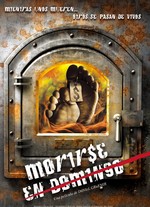
2007 PSIFF—Morir$e En Domingo / Never On A Sunday—The Evening Class Interview With Daniel Gruener

PSIFF's Cine Latino showcase included the North American premiere of Daniel Gruener's Mexican black comedy Morir$e En Domingo / Never On A Sunday (2006), a film that contains enough corpse violation humor to send Bay Area critic Mick LaSalle screaming from the theater but whose surreal treatment of death most Mexicans will likely understand and culturally appreciate. The film was likewise one of the 13 films included in PSIFF's New Voices/New Visions jury competition (though it lost that honor to Verónica Chen's Agua). Of additional note is that the film was programmed for PSIFF by San Francisco's Anita Monga.

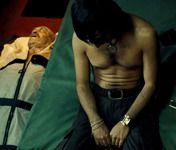
Julio Salas, the favorite uncle of Carlos (Humberto Busto), passes away after a long illness and everything starts to go irreverently wrong from there. First—though Carlos can close Julio's eyes—he can't get his uncle's mouth to remain closed and ends up having to tape it shut. Secondly, his uncle has died on a Sunday and—as Gruener's second feature film makes painfully clear—a Mexican should never die on a Sunday. Since coroners refuse to work on Sundays, there is no one to sign the death certificate required by a reputable funeral home to come and pick up the corpse. Further, due to financial difficulties, the family is forced to browse the Yellow Pages to find a modest funeral home to make the arrangements. Such undertakers are nicknamed zopilotes in Mexico; i.e. vultures. By phone they finally locate Joaquin (Silverio Palacios) whose wife has summoned him from the local bar. In his drunken state, Joaquin helps remove the body of Uncle Julio. Nephew Carlos is ordered by his father to help Joaquin transport the body to the funeral home, to oversee the cremation, and to return with a receipt. Distraught and distracted, Carlos fails to follow his father's directions and leaves his uncle's unsupervised corpse at the funeral home. Joaquin seizes the opportunity to sell the cadaver to the local university for instructional autopsies. When Carlos inadvertently learns of this transaction, he returns to Joaquin demanding not only a receipt but the retrieval of his uncle's body for proper cremation. What ensues is a grotesquely surreal and comic chain of events—not the least of which is that Carlos falls in love with Ana (Maya Zapata), the zopilote's daughter. As the PSIFF program capsule synopsizes, immersed in a macabre world of depravity, corruption and death—encapsulated within contemporary Mexico City—Carlos discovers that Sunday—not Friday the 13th—is the unluckiest day by far.

After the screening, I approached Daniel Gruener to ask a few questions. As preposterous as the pretext of this black comedy seemed, Gruener had indicated in his introduction that it was based on actual events that had happened to the film's screenwriter, Antonio Armonía. I wanted to delineate what was fact and what was fiction. Much to my horrified amazement, Gruener confirmed all the events leading up to the second half of the film were true. Armonía's uncle had died on a Sunday in September 2004. The family had hired a zopilote to cremate the body only to discover later that it had been sold to a university morgue in Morelos. At the time Armonía and Gruener had been working on a script for an American production but when Armonía relayed the gruesome news, Gruener felt this was the anecdote around which they should be working. They set the American script aside and started developing the script for Never On A Sunday. Gruener and Armonía wanted the film's humor and irony to function as a weapon against the pain caused by the loss of a loved one and also the anger they both felt against the reality of their country. They wanted Never On A Sunday to be a film about people surviving painful situations.

Recalling how badly Chronicle critic Mick LaSalle had reacted to the corpse-violation humor in The Three Burials of Melquiades Estrada, I queried whether U.S. movie audiences would be willing to accept Never On A Sunday? Though Never On A Sunday approximates the gallows humor of HBO's hit series Six Feet Under, it goes much further in its morbid dalliance with mortality; a flirtation with which most Mexicanos are familiar but not so much here in the States. I asked how the film had been received in Mexico?

Never On A Sunday has been screened only once in Mexico at the Morelia Film Festival to a capacity audience in a large theater. Gruener felt the Mexican audience understood what they were watching, that they knew such corrupt transactions were not only possible but frequently happen in Mexico. They "got" the film's underlying message. There are certain dialogues and details in the film placed especially for Mexican audiences and that might be impossible to understand if you are not Mexican. Interestingly enough, when Never On A Sunday was shown at the San Sebastian International Film Festival, the Spanish-European audience didn't react to specific Mexican details but generally reacted quite openly to the film's dark humor and caustic situations. They were stunned to discover the film was based on real and frequently possible corruption. Such corpse theft would be extremely difficult in Spain, if not downright impossible in the United States. That being said, however, Gruener related that—while on the plane flying into Palm Springs—he was reading a newspaper article about an open casket memorial service for James Brown, who died last Christmas and is still somehow lying around. Americans, he smiled, might not be that far off from Mexicans after all.

Exploring what is quintessentially "Mexican" about Never On A Sunday, Gruener explained that the film is purposely full of contradictory emotions. The living survive thanks to the dead. The doubts that each of us has about our existence is reflected in the different characters of the film. As Gruener has written, he wanted the film to "function as a mirror revealing how we are as Mexicans in these times, our families, our fears, our guilts, our lies, our abuses, our waste products. About a society in transition debating its survival or its death. In this story—in contrast to so many other films—what is of least importance is how a person dies. Here, what we are dealing with is how where some die, others play with fire."

Quoting Woody Allen—"It's not that I'm afraid of dying. I just don't want to be there when it happens"—Gruener has explained that "talking about death has always been difficult in a modern world. Everything functions as if death did not exist. We prefer to ignore it; to create joy and good health within reach of all. Dying is one of the few things that none of us who are alive have any experience firsthand. This great unknown that accompanies from the day we arrive in this world provokes a variety of sentiments but, above all, fear. This film is about Mexicans and this is a country that smiles at death, gives it a face. We celebrate it. Make caricatures of it. Mexicans know they won't avoid it by ignoring it. Nevertheless this immortal love does not veil the perplexity and fear about dying that is equally as deep seated as it is in other nations, but the Mexican laughs at death as a way of celebrating the fact that he or she is alive and confronting the unavoidable. As Octavio Paz was to say, 'Death fascinates us Mexicans. It attracts us. Wreaks vengeance on life, stripping it of all its vanity and pretensions. Converting it into what it is: a pile of bare bones and a horrific grimace.'

"In his anthology of black humor, André Breton points out, 'Mexico, with its splendid funeral toys, affirms itself as the chosen land of black humor.' However, few films today utilize this humor based upon our unique appreciation of death that endows it with a life of its own and increasingly fewer Mexican works of art and artists, including paintings, the pioneers of playing with the skeleton, are interested in reflecting our 'favorite toy' and our 'most enduring love.' That's what life is and why it is so difficult. Furthermore, we must know how to die on the right day. In the final analysis that is what is the real tragedy of our times. Not dying. That we all know that that day will come even though we may not want to be there when it does."

I asked Gruener about the actors in Never On A Sunday and he proudly asserted they are some of the strongest actors currently working in Mexico. He's sure I have seen some of them in other films but maybe didn't recognize them because of the work he did transforming them into their characters. Humberto Busto, who plays Carlos in the film, made his film debut as Jorge in Amores Perros. Silverio Palacios, who plays the zopilote Joaquin, was the guy at the beach in Y Tu Mama Tambien. Maya Zapata (Ana) just finished filming Bordertown with Jennifer Lopez and has done quite a few films, including her first character role at the age of 6 in Luis Puenzo's Old Gringo. Gruener prepared his characters—especially these three—for eight months, hammering out the script. He believes they have done a very good job.

Never On A Sunday is Gruener's second full-length feature, so I asked about his first and what we can expect from him in the future? His first film
Sobrenatural / All Of Them Witches (1996) is a psychological horror piece, Polanski-style, that proved to be popular with the American studios and secured him two opportunities to make film in the United States. His third project is a Mexican version of Frankenstein.

Cross-published at
Twitch.

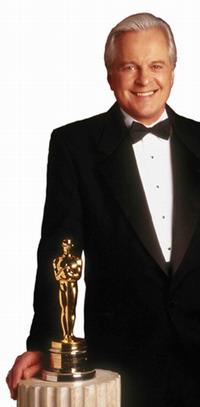
TURNER CLASSIC MOVIES "31 DAYS OF OSCAR"—The Evening Class Interview With Robert Osborne


As prime time host and anchor of the Turner Classic Movies ("TCM") cable television network, Robert Osborne brings viewers out of their living rooms and into the world of classic Hollywood, providing insider information, facts and trivia on TCM movie presentations.

Born in Colfax, Washington (population: 2700), Osborne graduated from the University of Washington's School of Journalism, appearing in local plays in his non-study hours. He soon went to Hollywood as an actor under contract to Desilu Studios and joined the staff of The Hollywood Reporter in 1977. Six years later he began writing the paper's influential "Rambling Reporter" column, which covers all aspects of the movie and television business. He also attends the Cannes Film Festival to review films for the paper and is The Hollywood Reporter's chief Broadway critic, covering New York plays and first nights.

Osborne began as the on-air entertainment reporter for the nightly news on Los Angeles' KTTV in 1982. In 1987, he was signed by CBS to make daily appearances on the CBS Morning Program. From 1986-1993, he was also a regular host of The Movie Channel cable network.

From 1981-83, he served as president of the Los Angeles Film Critics Association (LAFCA). He is a frequent guest on Entertainment Tonight, Good Morning America and other network shows; won a Golden Mike for excellence (for a TV special he wrote, produced and hosted titled Lana Turner Today); has twice been a CableAce nominee for his "Osborne Report" segments for The Movie Channel; and was nominated for an Emmy Award as Best Host Moderator. Osborne is also the winner of the 1984 Press Award from the Publicists Guild of America.

In addition to his hosting duties for TCM, Osborne has also done several specials for the network, including Private Screenings, an hour-long interview series with such Hollywood luminaries as Robert Mitchum, Jane Russell, Shirley MacLaine, Ann Miller, Mickey Rooney, Charlton Heston, Jack Lemmon, Walter Matthau and Tony Curtis.


Anticipating ABC's broadcast of the 79th Annual Academy Awards on Sunday, February 25, at 5 p.m. PST, TCM will be showcasing the versatility of the films honored by the Academy of Motion Picture Arts and Sciences during its 13th annual on-air festival "31 Days of Oscar", February 1 through March 3. Each day of programming will be themed into different categories including "Directing", "Cinematography," "Actor," "Actress," "Song," "Costume Design," and "Original Screenplay." Additionally, a 72-hour "Best Picture" marathon, from 5 p.m. PST Thursday, Feb. 22 through 5 p.m. PST Sunday, Feb. 25 will serve as a drum roll leading into the 79th Annual Academy Awards telecast. Though the complete schedule is not quite yet up on TCM's website, it soon will be, though it has been announced on TCM's Now Playing subscription magazine.

Robert Osborne will be guiding viewers throughout more than 350 movies aired during the festival introducing landmark movies such as Breakfast at Tiffany's, From Here to Eternity and West Side Story. More than 75 titles are new to TCM's "31 Days of Oscar" this year and nearly 40 films are a network premiere, including The High and the Mighty, The Son of Monte Cristo, The Absent Minded Professor, The Muppets Take Manhattan, The Talented Mr. Ripley and Four Weddings and a Funeral, just to name a few.

I had the welcome opportunity to briefly chat with Robert Osborne this morning via telephone. As a self-proclaimed "Oscar junkie", I imagined him trembling in his boots right around now. Of course, he admitted, but all the more so because it's been a truly fine year for film. There's some major projects out there that make this year special and noteworthy.

His frontpiece essay for TCM's Now Playing on "31 Days of Oscar" reads customarily wry, especially his comment about the prominent placement of those strange ads in publications and billboards screaming, "Me, me, me! I'm the best" by people who—when they win—have to be helped from the stage because they're so overcome with surprise. ("Who me? I'm the best?")

Osborne is the first film commentarian I've heard of who is actually billed as an "Oscar historian" and is, indeed, the official biographer for the Academy Awards. I asked him what that meant, exactly, his being an "official biographer"?


Thanks to a series of books he'd written earlier in his career on the subject of Hollywood's annual Academy Awards—notably his "home-made" Academy Awards Illustrated—he was invited by the Academy of Motion Picture Arts and Sciences to author 75 Years Of the Oscar. They gave him access to their voluminous files and archives and gave him free rein to include whatever he deemed important. The book has since been called "the most comprehensive and definitive book ever done on the subject" and one of the achievements he took most pride in was giving focus to actors who had been blacklisted from Oscar nominations during those sad, nefarious days of Hollywood.

Along with introducing TCM's "31 Days of Oscar" Osborne has been invited back by the Academy Awards to be a red carpet greeter. I asked if there was anyone he hadn't met yet who he was hoping to meet on the red carpet this year?

Osborne explained that he doesn't really get the opportunity to "meet" people. They've a particular agenda when they're on the red carpet and a specific duty to their fans and press. But it's fascinating to watch how individuals work the crowd, someone like George Clooney, for example, is a master at it while other actors are not as skilled. But's it's always wonderful to briefly greet someone you admire. Last year he got to speak with Judi Dench and Meryl Streep and some of the old guard was there as well—Lauren Bacall and Jane Russell.

Before the Academy entrusted him out front, Osborne also served as a seat-filler at the awards ceremony. I asked him about that experience.

That was a long time ago, Osborne chuckled, before he had an actual print gig. He was freelancing, and was offered a chance to be in the auditorium as a seat-filler. Whenever a man had to go backstage to prep for an on-stage presentation, Robert would fill their seat so that when the camera turned on to the audience, there would be no empty seats. He did this for several years. One of his favorite years was when Richard Burton was called backstage and he got to sit down next to Elizabeth Taylor. Burton ended up not returning to his seat, remaining backstage drinking, which infurtiated Elizabeth to no end. She was cussing up a storm, calling him four-letter names under her breath. She wanted to be backstage drinking too.

Noting that he had become the face of TCM, sporting a confident avuncular style, what I would enviously call t.v. glamour and—although he's been working the field for a long time as a critic-columnist for The Hollywood Reporter—I posed that it would be safe to say that for many of us his hosting on TCM was our first exposure to his wit and encyclopedic knowledge. I asked him what precipitated the shift from print film coverage to on-air coverage?

Basically, he chuckled, he was invited. Everything opened up for him when he got his job with The Hollywood Reporter because, in those days, if you worked for a trade journal, you were invited by the local television affiliates to cover entertainment-related events. If, for example, Henry Fonda was in the hospital and they thought he was going to die, they'd send you down to the hospital. In time, he was invited to handle their entertainment coverage and, over time, was invited to host on The Movie Channel and Turner Classics. It wasn't anything he sought out personally. His hobby just got out of control. He still considers himself more of a print writer.

Having recently spoken with Osborne's Essentials co-host Molly Haskell who commended his grasp of "high-level gossip" (Osborne chuckled at the characterization), I observed how he charmingly caters to moviegoers' prurient interest in the lives of actors and filmmakers and sifts out interesting trivia about the filmmaking process. I was curious how he obtained all that information and how he stored it? Did he have some kind of sophisticated file card system?

Much of it was timing, he bemused. When he arrived in Hollywood it was at a time when press were not like today's paparazzi. It was not as frantic and intrusive. You could go to a party and Judy Garland would be singing at the piano, maybe Cary Grant would make an appearance, or Henry Fonda and his wife Shirley, things were much more relaxed. And the thing was that most of these actors, like Bette Davis or Judy Garland, had passed the heydays of their studio careers and they were charmed by someone, like Osborne, who knew about their careers and what they had done. They were forthcoming because of that. At that time there was not yet a nostalgia for Hollywood's yester years and certainly nothing like TCM to educate the public.

I commended Osborne on his fair approach towards appreciating films. Even with just a one-star film or a two-star film, he highlights just enough information to convince his audiences that even a minor vehicle deserves respect and attention. Rather than rip movies apart, which often seems the critical rage, he focuses on how they are put together. I love that.

Robert was so happy to hear that and appreciated the feedback because it's exactly what he's trying to do. Even if a movie isn't a great movie, who's to say it's not deeply loved by someone and what good does it do to ruin their enjoyment?

While Osborne was an actor under contract with Lucille Ball and Desi Arnaz, it was Lucy who encouraged him to become a writer. I asked if he could speak a bit about her and why it was he heeded her advice?

Though Lucy was famous for her comedy, Osborne described her as a very serious business woman who suffered a bit for not thinking she was smart, even though she had major street smarts. After interacting with Osborne for a while and noting his great interest in Hollywood history, she suggested he shift into writing because—while there were plenty of actors to go around—there were not as many writers. Further, she wasn't confident that Robert had the necessary street smarts to deal with auditions. There were so many aggressive young actors who could do nothing else with whom Osborne would be competing and Lucy felt he should explore his other talents. He could write. He had a passion for Hollywood's film history. Osborne took Lucy's advice and has never regretted it. To this day he has not seen a play or a movie where he felt he should have played the part. Lucy remained his friend over the years, checking in at least annually to see what he was doing, who he was socializing with, and frequently inviting him over for dinner.

When I asked what advice he might give young people approaching the field of film writing or on-air film reportage, he said first not to do it unless you have a passion for it. And secondly, he had to pass on the same advice Lucy gave him, which was to write a book. It doesn't have to be a great book. But find something that hasn't been written about and write a book. That will show others you have the discipline to write and works well as a calling card.

Elsewhere, I recommend Scott Holleran's Box Office Mojo close-up on Robert Osborne, about.com's detailed interview, Joanie Kauffman's New York Times write-up on Osborne's real estate interests, and Adam Bernstein's profile for The Washington Post. Osborne likewise moderates a late March Classic Film Festival at Grady College of Journalism at The University of Georgia. I'm tempted to attend. How about you?

Cross-published at Twitch.

Wednesday, 17 January 2007

2007 PSIFF—Monkeys In Winter (Maimuni prez zimata)—The Evening Class Interview With Milena Andonova


Attending the Palm Springs International Film Festival has been a welcome respite from the self-imposed tyranny of film blogging; but, after seeing thirty-some films, it's time to get to work! Anticipate a handful of interviews, overviews of the foreign language submissions and the Latino fare, and Michael Hawley's impressions and overview of his own experiences at the festival. All as fast as I can pump them out.

I dedicate this write-up to Marina, a faithful articulate reader of The Evening Class who—in the comments section of my entry on the Foreign Language Submissions to the Academy Awards—encouraged me to view Monkeys In Winter, a Bulgarian entry at PSIFF, which she has defended as representative of "the revival of Bulgarian culture—freed and fed with life."

* * *

Milena Andonova's suitcase did not arrive with her from Bulgaria when her plane landed in Palm Springs. Though distracted by such troublesome logistics, she nonetheless came directly to the Camelot Theater from the airport to introduce the first festival screening of her debut feature Monkeys In Winter, promising that by the time the movie was over she might be feeling a bit better. This proved to be the case as she was promised her luggage within a couple of days.

Directed by Milena and produced by her younger sister Nevena Andonova, Monkeys In Winter was Bulgaria's official foreign language submission to the Academy Awards and in competition for the John Schlesinger Award for Outstanding First Feature or Documentary at PSIFF. It was the winner of the East of the West Competition at the 2006 Karlovy Vary Film Festival and just this last Saturday—according to the Focus Information AgencyMonkeys In Winter won Movie of the Year at Bulgaria's National Film Center. The win was heightened by its being in competition with three other films, a wealth which Bulgaria has not seen in over a decade. Along with Movie of the Year, it won awards for Diana Dobreva's performance, set design, costumes and Rali Rachev's cinematography. So although Monkeys In Winter was not chosen for the Academy Awards short list for foreign language feature, praise at home celebrates the promise of Andonova's future work.

As reported by Veneta Pavlova for BNR Radio Bulgaria Culture, Monkeys in Winter "marked the comeback of Bulgarian cinema to the prestigious family of outstanding European productions." The daughters of the late theatre and film director Metodi Andonov, Nevena and Milena have inherited his talent and their win at the 2006 Karlovy Vary Film Festival echoed their father's win 34 years previously for his emblematic film, Kozijat Rog / The Goat's Horn (1972). Yana Hashamova's analysis of Monkeys In Winter at KinoKultura insightfully examines Milena's cinematic homage to her father's films.


Monkeys In Winter's narrative is set over a 40-year time span, braiding three stories that explore the lives of three women from separate generations who each face difficult decisions about their roles as mothers in Bulgaria's recent social and political history. The tale of Romany gypsy Dona (Bonka Ilieva-Boni) begins in 1961; followed by the story of young attorney Lucretia (Diana Dobreva) 20 years later; and then of Tana (Angelina Slavova), a young woman struggling to have a child in 2001. As Leslie Felperin has noted in her Variety review, these "three strands are only glancingly related", sharing settings and minor details, but achieving "a certain thematic harmony" by "subtle juxtapositions of the heroine's different fates." Boyd van Hoeij of European-films.net describes the film's narrative structure as "a very solid triptych in which [Andonova's] reflections on mother- and womanhood are aided by careful cross-pollination." I defer to their synopses.

The intergenerational continuity of these three women creates a textured feminine sensibility unique in Eastern European film. After the screening, I approached Milena Andonova to discuss the nature of the relationship between Dona, Lucretia and Tana. She clarified the relationship was inferred if not exact. They could be thought of as grandmother, mother and daughter, even though they weren't literally related in the film. Further, Andonova wanted to illustrate a quality of desire in modern women, how their longing for certain lives distracts them from fulfilling their lives. Their longing for lives they do not have is what connects these three women. Dona longs for a husband to safeguard the future of her three children. Lucretia longs for a court assignment in Sofia to avoid being assigned to the provinces and approaches pregnancy as a means to achieve same. Tana longs for a child even after discovering her husband's infertility.


These resemblances of desire sourced in motherhood are the "careful cross-pollination" Boyd van Hoeij has noted. But Andonova employs other images to provide linkage and crossover between the three stories. Dona and Lucrecia share a dream of a young girl drowning in a pool. When I inquired about this, Andonova explained that it was not really a pool, but a spa. She joked that Sofia, Bulgaria, could actually be called Palm Springs because the region is rich in mineral waters and there is a long history of women communing at spas built upon these waters. Their shared dream informed us of two things: first, that at a certain moment in time, both women were in the same place; namely, this spa in Sofia. Dona was there with her daughters and Lucretia, as a young girl, was there with her mother. Secondly, the scene painfully delineated Lucretia's relationship with her mother who punishes Lucretia by forcing her to swim, even though Lucretia fears drowning. Andonova explained that this was also a clue to Lucretia's character; why in her adulthood she sought order and control and harbored an innate eschewal of motherhood.


The shared dream becomes a sophisticated cross-referential reflection on mother-daughter relationships. Lucretia's nightmare is based on her remembrance of how she was treated by her mother and Dona's nightmare was based on her witnessing Lucretia's treatment and projecting it onto her own daughter. The cross-referentiality is further tightened by Tana's later frequenting the spa upon advice of its miraculous powers to induce pregnancy. The film is purposely vague about Tana's actually becoming pregnant. Was it the miraculous waters? Or the indirect agency of a handsome young spa masseur? We're never quite told exactly how it happens but are shown its disastrous results. The scenes at the spa were very important for Andonova because water is where life is created and, in her mind, associated with womankind.


Another shared image between the three women is that of the monkeys in winter, which likewise serves as the film's underpinning metaphor and provides its title. As Marina observed in her earlier comments, a documentary about Japan's macaques (monikered "snow monkeys") is broadcast on both Lucretia's and Tana's televisions, even though neither seem to pay much attention. The macaques first fascinated me in Ron Fricke's Baraka, where they were shown warming themselves in hot springs while snow falls all around them. The tie-in with the women in the spa is obvious. These monkeys live in Jigokudani Yaen-koen—or "Hell's Valley"—in the snowy alps of Honshu above the steaming Yokoyu River. A natural treasure and winter spectacle, National Geographic's Jennifer Ackerman informs that "these monkeys are famous for their cultural transmission behavior (young monkeys learn from their elders novel kinds of behaviors, from grooming techniques to food preparation) and for living farther north than any other primate except humans."

Andonova's script for Monkeys In Winter is based upon three short stories by Maria Stankova, who likewise shares the screenwriting credit. Marina advised that, in an interview with Stankova, she said we all are like monkeys in the winter: desperately trying to survive, no matter the price! Marina also focused on the line of one of the characters who said humans are worse than monkeys—and more stupid—because monkeys, at least, take care of their children no matter what happens.

Andonova confirmed these sentiments when I asked her about the metaphor's meaning. Winter, she said, is not the season of monkeys and yet they manage to meet winter head-on and live their life. No matter if it is winter or not, these monkeys look after their small babies. By pitiable comparison, the three human women do not act similarly. It is Andonova's wish that humans be like monkeys in winter. No matter what the social or political situation, human beings—especially women—have to be responsible for their decisions and actions, no matter what the difficulties are.

Though the documentary of the monkeys in winter did not come up in the story of Dona, it was inferred by the final sequence of her sending her children away into a snow storm. At the end of her story she looks like a monkey in winter when she orders her children to go away and she turns to face her future, possibly prison, possibly continued prostitution.

Enforcing the analogy, at film's end Lucretia is shown walking deranged in the snow, looking for the child she has abandoned in a moment of poor judgment.

One final image that links the stories is that of the frog and its association with pregnancy and children. Dona's children are seen playing with a frog and then later, in Lucretia's sequence, the film contains a frog pregnancy test, which provides one of the "sparkly jet beads of black humor" that Variety's Leslie Felperin states relieves the pervasive gloom of Monkeys In Winter. Andonova told me that, when she was a child, the official way of testing for pregnancy—because it was the quickest way of finding out—was for a woman to provide a urine sample, which was then injected into a frog (usually provided by the woman as well). If the frog died, that meant the woman was pregnant. Felperin points out the comic instance of both Lucretia and Tana visiting the same sex clinic where they are both humiliated by a "robustly rude" receptionist.


As Marina has further informed me—even generously providing video clips—Bonka Ilieva-Boni, who plays the gypsy Dona, is a famous popfolk singer in Bulgaria. Andonova was glad I found her stunning and said she spotted her through a photo in a magazine and pursued her for the role.

Photo of the Japanese macaque courtesy of Shizuko Mishima. Cross-posted at Twitch.

Tuesday, 2 January 2007

2007 PSIFF—Anticipating Palm Springs


Contributing Evening Class writer Michael Hawley offers anticipatory comments regarding our upcoming exploration of the Palm Springs International Film Festival and a rundown of the films he'll be catching.

* * *

If you follow the world of film festivals over the course of a year, which for me at least seems to begin with Cannes in May and ends nearly a year later with our own San Francisco International Film Festival ("SFIFF"), it's possible to tally quite an extensive list of films, films one feels it necessary to see in order to remain cinematically savvy. Last year, after the schedule was announced for the SFIFF, I noticed that the number of films on that list which had not screened (and therefore would possibly never be screened) in the Bay Area was longer than ever. A friend had been suggesting for a few years that I check out the Palm Springs International Film Festival, a notion I never took seriously. Of what merit could a film festival in Palm Springs, of all places, be? Out of desperation and curiosity, I checked out the festival's 2006 line-up. Lo and behold, listed there were many of the films that were Bay Area M.I.A.: Kornél Mundruczó's Johanna? Check. Amat Escalante's Sangre? Check. Jean-Marc Vallée's C.R.A.Z.Y.? Check. Obviously, some re-evaluation of the situation was in order, and with that, Michael Guillén and I made plans to attend Palm Springs in 2007.

2007 is here and we'll be leaving for Palm Springs in a few days. This is the first time I'll be traveling to an out-of-town film festival, unencumbered by the distractions of work and home, free to indulge in an orgy of movie-going. So the question becomes then, how many films can I possibly see in nine full days if I really apply myself? Well, Palm Springs, as it turns out, is a really large festival. This year they'll be showing a record 254 films (only eight of them are shorts) from 73 countries. How does one choose a few dozen films from a list of 254?

The process began several weeks ago when we received a clandestine 130-film "initial" list from a source who shall remain nameless. This list was scrutinized and on-line reviews of unfamiliar films were sought out . . . thank you Variety! Must-see lists were then drawn up and speculation made as to which 100 or so films might make up the balance of the final line-up. When a "final" list appeared, however, it became immediately apparent that the "initial" list was loaded with red herrings! Nowhere to be found were such initial "must-sees" as Bruno Dumont's Flanders, Lucas Belvaux's The Right of the Weakest, Ken Loach's The Wind That Shakes the Barley, Asger Leth's Ghosts of Cité Soleil, Carlos Sorin's The Road to San Diego and Jia Zhangke's Still Life.

Armed with this "final" list, new lists of must-sees and want-to-sees were compiled and revised. We looked into our crystal ball and tried to surmise which films were likely candidates for future Bay Area festival screenings and theatrical releases, and could therefore be passed over in favor of something more esoteric and obscure. All this while knowing full well that much of this would be rendered meaningless when the actual festival schedule was revealed, as it was on Christmas Day.

That's when you find out that such-and-such a film is only being screened on the same day and at the same time as such-and-such a film, and so on. But in the end I think I've done very well for myself. I'm getting to see 18 of the 21 films on my must-see list, and 13 of the 25 films on my alternative want-to-see list. My biggest disappointment is that I'm missing Royston Tan's 4:30. I was a huge fan of his first film 15, and I can only hope this new one shows up at the San Francisco Asian American International Film Festival or the SFIFF. The same goes for my two other must-sees, Invisible Waves and DarkBlueAlmostBlack. Among the films on my want-to-see list, I especially regret missing Monkeys in Winter and Lady Zee, a pair of Bulgarian films about which I've heard excellent things. The same goes for Children and Sons, from Iceland and Norway respectively. And I have to believe that Jafar Panahi's Offside and Im Sang-soo's The Old Garden will turn up in the Bay Area eventually.

But enough grousing about the movies I won't be seeing at Palm Springs. Here are the movies I will be seeing, in the order I'll be seeing them.

The Yacoubian Building (Egypt)—This is probably the film I'm most looking forward to. When Alaa Al Aswany's sensational novel came out in 2002, it became the second most widely read book in the Arab world, after the Koran. I finally read it this summer and was struck by the frankness with which it explored such forbidden topics as homosexuality, government corruption and religious hypocrisy. The film adaptation is reported to be the most expensive production in Egyptian movie history and the cast is an amazing who's who of contemporary Egyptian cinema. This was originally slated to be the gala opening night film of this year's SF Arab Film Festival, complete with cast members being flown in from Egypt, but the French distributor ended up backing out. I'm therefore especially grateful to the Palm Springs festival for including it this year. This is also Egypt's 2006 Oscar submission.

OSS 117: Nest of Spies (France)—Set in Cairo in the 1950s, this espionage comedy is being described as a French James Bond meets Maxwell Smart. This will be one of the few moments of levity in my festival schedule and was chosen on the basis of its Egyptian setting, a favorable Variety review and a cool trailer.

Strike (German/Poland)—The latest from Volker Schlöndorff is a biopic on Agnieszka Kowalska, who was an instrumental catalyst in the Gdansk shipyard strike and the resulting Solidarity movement in Poland.

Beauty in Trouble (Czech Republic)—Jan Hrebejk's 2004 black comedy Up and Down was one of my Top 10 films of last year, so it was a given that his new feature would be near the top of my festival must-see list.

The Blossoming of Maximo Oliveros (Philippines)—Like Michael Guillén, I also missed out on seeing this when it played at several festivals here in the Bay Area. How interesting that the Philippines would choose a movie about a gay kid who falls in love with a cop for its Oscar submission.

Forever (Netherlands)—A documentary about my favorite cemetery in the world (Paris' Père Lachaise) by one of my favorite documentary filmmakers in the world, Heddy Honigmann (Metal and Melancholy, Dame la Mano). What's not to love?

In the Pit (Mexico)—This documentary about construction workers who are building a second deck on a Mexico City freeway has been unanimously praised for its humanity and lyricism. A Sundance jury winner for best international documentary.

Fair Play (France)—This black comedy is one of several films I'm seeing simply because there wasn't anything more interesting in its time slot. It's about a group of employees who go on a company retreat and compete in various sports activities. Variety calls it, "a guilty pleasure for fans of anybody in the name cast," which for me would include Benoît Magimel (The Piano Teacher) and Jérémie Renier (L'enfant).

12:08 East of Bucharest (Romania)—One of two Romanian films that grabbed a lot of attention on the festival circuit this year, I caught this at the Mill Valley Film Festival and am pleased to be taking a second look. One of the most enjoyable times I had at the movies in 2006.

Waiter (Netherlands)—A miserable middle-aged waiter implores the screenwriter who controls his destiny to lighten things up a bit. Sounds a bit too much like Stranger Than Fiction, and one IMdb user compared it to (shudder) a Pauly Shore comedy, but the subject matter is too near and dear to give this one a pass.

A New Day in Old Sana'a (Yemen)—I let out a cry of delight when I saw this on the Palm Springs schedule. Just as I never expect to travel to Yemen, I never really expected this obscure film to ever appear on my horizon. I've long been fascinated by photos of the wedding cake-clay architecture of this Yemeni capital city, so even if the film is less than engaging, it should make for a great travelogue. This is allegedly Yemen's first narrative feature film.

Aviva My Love (Israel)—A rave review in Variety, plus the fact that I haven't seen a bad film from Israel in years, made this black comedy the logical choice for its time slot. Winner of six Israeli Oscars.

The Missing Star (Italy)—In 1994 I was blown away by director Gianni Amelio's Albanian-set drama L'America, which went on to win the European Film Award for Best Picture that year. He's made three features since, none of which appear to have made it to the Bay Area. This is his latest, about a man (Serge Castellitto) who journeys to rural China in order to repair a defective blast furnace manufactured by his company.

One to Another (France)—I selected this piece of sex and nudity filled Eurotrash after the film I originally chose for this time slot was rescheduled. The reviews are uniformly horrible, but hey, there's going to be lots of sex and nudity.

Men at Work (Iran)—Great reviews all around for this absurdist comedy about four men who encounter a phallic rock at a scenic highway overlook and decide they simply have to topple it. From a story by Abbas Kiarostami.

Family Law (Argentina)—I really enjoyed director Daniel Burman's last feature Lost Embrace, and am looking forward to this, his latest. Originally slated for a limited US release, the film performed so poorly in its NY opening that a further release is now in doubt. This is Argentina's 2006 Oscar entry.

The Page Turner (France)—This revenge thriller attracted a lot of attention when it premiered in Un Certain Regard at Cannes this year. It stars one of my three favorite French film actresses, Catherine Frot, plus Déborah François (L'enfant)and Pascal Greggory.

The Education of the Fairies (Spain)—Another film chosen because it fit nicely into my schedule and was well reviewed in Variety. And it stars the always excellent Argentine actor Ricardo Darin.

The Way I Spent the End of the World (Romania)—The other Romanian festival favorite of 2006.

Transylvania (France)—I've been a big fan of French-Roma auteur Tony Gatliff since 1993's Latcho Drom. His films aren't always great, but they're never without merit. This one returns to the Romanian countryside last explored in 1997's Gadjo Dilo, and stars Asia Argento (of all people) and Head-On's Birol Ünel.

The Free Will (Germany)—The most controversial film shown at last year's Berlin Film Festival, this acclaimed 163-minute tale of a recently paroled rapist and his relationship with an abused woman will be the grim finale to a five-film-day in Palm Springs.

Bamako (Mali)—I'll see anything from sub-Saharan Africa, and have heard only great things about this, Abderrahmane Sissako's follow-up to 2002's exquisite Waiting for Happiness. Near the top of my festival must-see list.

Paraguayan Hammock (Paraguay)—An elderly couple, filmed in long shot, sit in a hammock and bicker for 78 minutes. And that's it. The advance word is that you either love or hate this piece by Paz Encina, which was commissioned for the New Crowned Hope Festival and the Vienna Mozart Year 2006. Interestingly, this is the only film in the series—which includes new films from Tsai Ming-liang and Apichatpong Weerasethakul—that is being shown in Palm Springs.

Falkenberg, Farewell (Sweden)—Extremely well received at both Venice and Toronto, and effusively praised in Variety, this tale of five friends-since-childhood who spend one final summer together is Sweden's 2006 Oscar entry.

Black Butterfly (Peru)—Another film chosen on the basis of a rave review in Variety, and a general interest in Latin American cinema. This is the story of a schoolteacher avenging the politically motivated death of her jurist fiancé.

The Summer Palace (China)—I missed seeing Lou Ye's latest at Mill Valley this fall, so once again I'm grateful to be seeing it here in Palm Springs. The only Asian film to screen in Cannes' main competition this year, the director's refusal to pre-screen the film for government censors has earned him a five-year ban from filmmaking. Adding to the controversy is the film's unusual sexual frankness, and the use of footage from the Tiananmen uprising.

Beyond Hatred (France)—This well-received documentary caught my attention when it played at Berlin. A young, gay man is beaten and drowned by a gang of skinheads, and this film documents the devastating effect this has on the young man's family, as well as the resulting court trial for the skinheads (whose original intent was to kill a foreigner).

Taxidermia (Hungary)—I adored György Pálfi’s wildly inventive debut feature Hukkle, and the outlandish trailer for his follow-up seems to promise more of the same. After The Yacoubian Building, this is the film I'm most looking forward to.

Lights in the Dusk (Finland)—My feelings for the films of Aki Kaurismäki range from outright loathing (Leningrad Cowboys) to pleasant indifference (The Man Without a Past), so I could have easily skipped seeing his latest. It is, however, playing at a time when nothing more interesting is going on. Besides, Kaurismaki gets points in my book for refusing to let this film be Finland's 2006 Oscar entry, due to continued U.S. involvement in Iraq. And he refused to attend the Oscars in 2004 when The Man Without a Past received a Best Foreign Language Film nomination for the same reason.

The Boss of It All (Denmark)—This is Lars von Trier's latest and because it will certainly be screened in the Bay Area at some point, I would have given it a pass had there been something more pressing showing. But there isn't, so I'll be amongst the first to catch this at its U.S. premiere.

Day Night Day Night (U.S.A)—I've read great and awful things about this film, but the premise is too hard for me to resist: A young woman prepares to end her life as a suicide bomber in Times Square.

Heaven's Doors (Morocco)—An interest in North African cinema and a rave Variety review made this an easy choice.

To Get to Heaven First You Have to Die (Tajikistan)—The title alone makes me want to see this, but a handful of positive reviews from Cannes and Toronto tell me this is something I shouldn't miss. A young newlywed goes to the city to see a doctor about his impotency problem. There he meets and sleeps with a married Russian factory worker and consequently—through her husband—becomes embroiled in a world of gangsterism and thuggery.

The Family Friend (Italy)—Director Paolo Sorrentino's highly acclaimed 2004 film The Consequences of Love never came to the Bay Area, so I'm really excited to see his new film, which screened in competition at Cannes.

Chronicle of an Escape (Argentina)—A thriller based on the true story of four men who escaped the tortures of Argentina's military regime in 1977. The film was originally slated for Cannes' Un Certain Regard, but at the last minute was deemed worthy of inclusion in the main competition. This is another film I missed at Mill Valley.

The Caiman (Italy)—The latest from two-time Palme d'Or winner Nanni Moretti, and another Cannes competition entry from this year, the film is a skewering of corrupt media magnate and (former) Italian Prime Minister Silvio Berlusconi.

Monday, 1 January 2007

ITALIAN CINEMA—Instituto Italiano di Cultura Film Calendar


You can't beat the price! In January and February San Francisco's Instituto Italiano di Cultura offers up five films for free. The first two—dedicated to Carlo Verdone—are for diehard Italianos since they'll be shown sans English subtitles. All other listings are shown with English subtitles. As the son of the famed film critic and professor Mario Verdone, Carlo Verdone was born with cinema in his veins. Some of the greatest figures in cinema, from Rossellini to Visconti, made regular visits to his home in Rome. As a child he and his brother Luca would show films at home for their friends, and he later graduated from the Centro Sperimentale di Cinematografia. He has received great artistic recognition and numerous David di Donatello, Nastri d'Argento and Foreign Press Awards throughout his career.

On Tuesday, January 9, the Instituto will show Verdone's nineteenth film L'Amore È Eterno Finché Dura (2003), wherein he selects a perennial question, a dilemma that has been analyzed, discussed and romanticized in infinite ways: Why does love disappear? Why do lovers stop desiring each other? Can passion be made to coexist with feelings of stability and security? Can't we stay in love forever? This entertaining yet weighty film is the product of skilled writing. It also offers a view of Rome that is rarely glimpsed in cinema.


On Tuesday, January 16, the Instituto profiles Verdone's acting skills in Giovanni Veronesi's Manuale D'Amore (2005), which is divided into four different episodes whose characters and situations are woven together as if it were a single story. Each episode covers the four fateful stages of romantic relationships: falling in love, hardship, infidelity, and breaking up, each of which is connected by a story line adeptly brought to life by the actors. The "manual" offers round-trip coverage of the stages of love, with all its ups and downs, with a dose of commedia italiana for a speedy recovery. Verdone has just completed working on a sequel to Manuale D'Amore starring Monica Bellucci to be released in 2007.


On Tuesday, January 25, in conjunction with the Holocaust Center of Northern California, the Instituto will commemorate the Day of Remembrance with a presentation of Vittorio De Sica's film Il giardino dei Finzi-Contini / The Garden of the Finzi-Continis (1970), which is based on Giorgio Bassani's book by the same name. The screening will be preceded by a presentation by Nora Contini, a member of the local Jewish community and a descendant of the Finzi-Contini family. In an article in the The Jewish Weekly (November 19, 1999), Nora Contini writes, "Contini is an old Italian Jewish name. The book on which the film was based was written by Giorgio Bassani, a contemporary of my father's. The book, however, is a novel, and like most novels it is a mosaic of fact and fiction. The name is ours, but the story is a blend of many families and many fantasies."

The Garden of the Finzi-Continis stirs incisive nostalgia, vividly evoking the tender period before the horrors that followed. It takes place in Ferrara in the years before World War II when a select few friends were allowed in the lush villa and garden of the Jewish Finzi-Contini family. Soon their lives are overwhelmed by the collective tragedy of the war, and the Finzi-Contini family is deported to Germany. In 1971 the film won an Oscar for Best Foreign Language Film, as well as a Golden Bear at the Berlin Film Festival and a David di Donatello for best film.


In February, the Instituto honors Gillo Pontecorvo by screening two of his films. On Tuesday, February 6, they present La Grande Strada Azzurra / The Wide Blue Road (1957) based on the novel Squarciò by Pontecorvo's screenwriter Franco Solinas. This film is an atypical comedy about a poacher fisherman brilliantly played by Yves Montand. The following Tuesday, February 13, the Instituto features Pontecorvo's infamous La Battaglia di Algeri / The Battle of Algiers (1966). This semi-documentary film on the Algerian war of independence with non-professional actors is likely one of the most powerful ever made on colonial occupation and its resistance. The film earned Pontecorvo international fame, though it was held back for release in France until 1971. Pontecorvo depicts one of the bloodiest anti-imperialist struggles of the 20th century: the rebellion between 1954 and 1962 against colonial domination in Algeria, one of the oldest and largest French colonies. The focus is on what led to the defeat of the Algerian National Liberation Front (FLN): the Battle of Algiers (1954-1957), which became the defining moment for the collective identity of Algeria against its French colonizers. The film's extraordinary authenticity and dramatic intensity are found in this particular context, joined with revolutionary filmmaking techniques, a very talented cast and an exceptional soundtrack by Ennio Morricone and Pontecorvo along with Algerian music. The Battle of Algiers centers on two main protagonists: Ali La Pointe (Brahim Haggiag), a symbol of the Algerian resistance and member of the FLN, and Colonel Mathieu (Jean Martin), commander of the French paratroopers whose task is to suppress the resistance. The film won the Golden Lion at the Venice Film Festival and three nominations for an Oscar.

All five screenings are shown at 6:30 at the Instituto Italiano di Cultura, 425 Washington Street, San Francisco; 415/788-7142. Again, the two Carlo Verdone screenings are in Italian without English subtitles and the remaining films with English subtitles.